Menu
Log in


Login/Logout
My Profile

MANY News

  • January 27, 2021 8:57 AM | Anonymous

    Humanities NY (HNY) is the state partner of the National Endowment for the Humanities. The mission of Humanities New York is to strengthen civil society and the bonds of community, using the humanities to foster engaged inquiry and dialogue around social and cultural concerns. HNY achieves their mission through grants, programs, signature events, and podcasts. To implement humanities projects across New York State, HNY offers three types of grant opportunities: Action, Quick, and Vision grants. 


    Action Grants

    Action grants offer up to $5,000 to implement humanities projects that encourage public audiences to reflect on their values, explore new ideas, and engage with others in their community. Action Grants have two deadlines per year; October 1 for projects startings January 1 or later the following year, and April 1 for projects starting July 1 or later. Applicants are notified of the Grant Review Committee’s decision approximately 10 weeks after the submission deadline. These grants aim to connect audiences more deeply to their communities where they live and work, solidify community partnerships and diversify audiences, and creatively employ the tools of the humanities to respond to issues and ideas capturing the imagination and passion of New Yorkers today. In 2021, HNY will continue to prioritize women’s history projects. 


    Quick Grants

    Accepted on a rolling basis, Quick Grants are $500 implementation grants for in-person public humanities projects that encourage audiences to reflect on their values, explore new ideas, and engage with others in their community. These grants are available to organizations whose annual operating expenses are $250,000 or less. Quick Grants aim to support smaller organizations in offering engaging public programming and promote equity in access to the humanities. They help ensure that New Yorkers of all backgrounds and from all regions may engage in cultural programming. Due to the impact of the COVID-19 pandemic, requests in 2021 related to the U.S. Women’s Suffrage Centennial in 2020 are welcome. 


    Vision Grants

    Also accepted on a rolling basis, Vision Grants offer up to $1,500 in support of brainstorming, researching, and professional development for organizations working collaboratively to develop new ideas and strategies for public-facing humanities projects. These grants aim to support emerging and established partnerships between different organizations on a shared project that may develop into public-facing activities, infuse program design with humanities themes and methodologies from the start, encourage experimentation and build community input into program design. 

    “Applicants should submit their proposal at least two months before their project start date,” said Scarlett Rebman, HNY Director of Grants. The HNY Grant Review Committee meets once a month to evaluate applications. “Applicants can preview the application on our website,” said Rebman. “We don’t require a Letter of Intent, and a phone appointment is encouraged but not required. 


    Grant Support

    HNY works closely with applicants throughout the application process. Applicants can request a phone appointment using the calendar on the HNY website to schedule an appointment to speak directly with a staff member. “Either I or one of my colleagues will call at the requested time, and we are happy to go over the opportunities and/or provide feedback on specific proposal ideas,” said Rebman. “We will also read draft materials. We strive to be transparent and supportive as possible. Don’t hesitate to reach out!”


    Advice for Prospective Applicants?

    “Have someone else read your project narrative for clarity and understanding,” said Rebman. “A proposal doesn’t have to be perfectly polished in order to get funded, but it does have to convey what your project will accomplish and why it is important.” Rebman also advises applicants to be sure to explain why the project’s topic or theme is significant to the audience you serve and why the humanities are central to the project.


    Preservation Long Island’s Action Grant

    Preservation Long Island with the NYS Museums hosted a Zoom conversation with “Indigenous History & Art at Good Little Water Place” curators Jeremy Dennis and Dr. Gwendolyn Saul 


    Last year, Preservation Long Island received an Action Grant for “Indigenous History & Art at Good Little Water Place.” The exhibition features artwork from nine contemporary Indigenous artists as well as collection objects from Preservation Long Island, the New York State Museum, and the Southold Indian Museum. The exhibit places contemporary Indigenous art alongside history objects “offering an inquisitive look at the history and on-going relations between Indigenous people and land, and reminding viewers of the responsibility that we all share to know our common histories with each other and their impact on our connections to place.” It’s a grant project that stands out for Rebman. 

    “The first thing that stood out is the importance of the topic,” said Rebman. “In the past Indigenous voices have often been absent from museums and exhibits that depict Indigenous history. There’s a lot of painful history there, and a lot of distrust. Preservation Long Island and other museums around the state are doing important work engaging communities in thoughtful conversations about the interpretation, and re-interpretation of Indigenous history and culture.” Rebman said that the key to the success of these initiatives is bringing in the right expertise and partnerships. This exhibit is curated by Jeremy Dennis, and Shinnecock Indian Nation artist and Dr. Gwendolyn Saul, Curator of Ethnography at the New York State Museum. “It was clear that they had assembled the right team to approach this topic with sensitivity and care.” 

    In September 2020, Preservation Long Island launched “Indigenous History & Art at Good Little Water Place” as a virtual exhibition. 


    Looking Forward

    In 2021, HNY is committed to supporting humanities projects that are timely, relevant, and engaging. “We also recognize that cultural organizations are responding to rapidly changing public health recommendations, and we welcome projects whether they are designed to be virtual, in-person, or a combination of both,” said Rebman. “We will continue to offer our partners flexibility in adapting projects to meet the evolving needs and comfort levels of their audiences.” 

    Grants are just one way to stay involved with HNY. “I invite MANY members to get to know us better,” said Rebman. “We have a lot going on virtually right now, including an ongoing series of virtual community conversations and the Amended podcast, which you can stream on our website or download with a podcast app.” 

    On Tuesday, February 16 at 2 PM, HNY staff is hosting a Grants information Webinar to review 2021 funding opportunities, eligibility, and the application process. Staff will provide tips for preparing successful applications and include time to answer questions. Learn more and register for this free webinar here: https://www.eventbrite.com/e/grants-information-webinar-tickets-137818182895


    Learn more about Humanities New York at humanitiesny.org

  • January 27, 2021 8:52 AM | Anonymous

    Economic Health of the Field graph from 2019 State of NYS Museums Report


    Dear Colleagues, Members, and Supporters,

    Like most of you, most of MANY’s plans for 2020 changed in ways we couldn’t imagine. One plan that didn’t change was the publication of our State of NYS Museums report that distributed data collected in 2019 from 206 museums of all disciplines, budget sizes, and geographic locations in New York. 


    The report presented new information about New York museums and 

    • fiscal health

    • staff sizes and salaries 

    • funding resources 

    • facilities

    • governance

    • programs

    • outreach

    • school partnerships


    We shared the report with legislators, funders, and members of the press to shine a new light on the ways in which museums were (or weren’t) well positioned to face the challenges of the pandemic and the awakening (for some) of the racial and gender biases in many of our museums.

    We began work on the last survey with a call for questions. We are starting the process for our next survey by asking you to let us know what you want to know about the state of New York's museum field.

    Some of the questions in the 2021 survey will duplicate those in 2019 so we can compare data. Others will reflect our past year’s shared experiences such as:

    • How are museums using digital technologies to reach audiences that can’t visit in person?

    • What strategies are museums using to stay financially viable? 

    • How have staff structures changed with layoffs and work reassignments to accommodate drastically reduced revenues? and 

    • How are museums creating room for the full range of human experience on their staff and in their galleries? 


    Click here to submit a question for our survey panelists to consider including in the 2021 State of NYS Museums survey. We will collect questions through February 5 and launch the 2021 State of NYS Museums survey on March 19 to coincide with the one-year anniversary of Governor Cuomo’s NY on Pause Executive Order.  


    With thanks, 


    Erika Sanger, Executive Director
  • January 27, 2021 8:50 AM | Anonymous


    In January 2021, Dr. Annie Polland returned to the Tenement Museum as the institution’s President after previously serving as Executive Vice President of Programs and Interpretation at the Museum from 2009 to 2018, before becoming Executive Director of the American Jewish Historical Society. Polland replaces Dr. Morris J. Vogel, who served as the Museum interim President since October 2019. As EVP, Polland launched the Tenement Museum’s “Shop Life” and “Under One Roof” exhibitions which “infused cutting edge interactive projection technology into historically recreated spaces for the first time” and won the Museum the 2013 Multimedia Installations Muse award from the American Alliance of Museums. We spoke with Polland about her return and her future plans for the Tenement Museum.


    Museum Association of New York: Congratulations on your return to the Tenement Museum and your new role!

    Dr. Annie Polland: Thank you! Yes, it has been nice. It’s been a challenging time but there is something really nice about being back.


    What makes the Tenement Museum a New York Museum?

    I think it’s right in the heart of New Yorkers. New Yorkers care about their city’s history. Despite constant change –tearing down buildings and building new ones –New Yorkers feel connected to what came before. New York is almost 40% immigrant, so the immigrant story is the New York story.


    Previously, you were the Tenement Museums’ Executive Vice President of Programs. What made you take the position of EVP when you started?

    In 1998 I was a graduate student at Columbia working for a company called Big Onion Walking Tours and my first gig was to lead a tour of the Lower East Side. At that point, Big Onion Walking Tours had contracted with the Tenement Museum, so I picked up my first Tenement Museum group in April 1998 and gave them a tour of the neighborhood. That’s how I kind of fell in love with the idea of public history. The Tenement Museum’s idea of bringing history to visitors through the stories of ordinary people really captivate me. 

    In 2009 I began working with the Museum at Eldridge Street which is a National Historic Landmark on the Lower East Side just a few blocks away from the Tenement Museum. If I recall correctly, I was giving a tour of Eldridge Street Synagogue and someone from the Tenement Museum who had participated in the tour offered me a job. So in many ways, my transition to the Tenement Museum was an organic and natural extension of the storytelling that I had been doing in the neighborhood.

    There are two things that I find fascinating about the Tenement Museum. One is that unlike most historic houses which kind of root themselves in one moment in time; the Tenement Museum features recreated apartments and family stories for many different time periods. You’re able to experience what it’s like to travel through time just by going from one apartment to another. Because these spaces relate to different moments in time, you have the opportunity to talk about different waves of immigrants who have come to the neighborhood over time. In the 1860s, when the tenement at 97 Orchard Street opened, its primary residents were of Irish and German background. By the time the building’s residential floors were condemned in 1935, 7000 people had called it home and the background of those residents shifts. That’s why we are able to tell the stories of multiple waves of immigrants, migrants, and refugees. With the opening of our second historic tenement at 103 Orchard Street, which remained a residence through the 20th century, we were able to extend that story closer to the present.


    The Tenement Museum is as much about the thousands of people who lived at 97 and 103 Orchard Street as it is about the millions of visitors who’ve come since. That dual priority of having a responsibility to the past residents and having a responsibility to the people in front of you, catalyzes the importance of storytelling and really brings history to life.


    Tenement Museum exterior in NYC’s Lower East Side


    What would you consider your greatest achievement during your time as EVP?

    While there were several exhibits and programs launched during my time as EVP of Programs, I think the core of it all is the educator training. It’s the way that we work with educators to tell stories and the way we bring in scholars to help flesh out the stories that we tell. This professional development that was happening behind the scenes –connecting scholars and our educators together and being able to work on that dynamic –was the most important to me and is what I think is driving the vision forward.


    What motivated you or what were the factors that motivated your return to the Tenement Museum? 

    The idea was floated to me at the very end of summer. I got a call from Morris Vogel who was serving as President. He actually caught me as I was on my way to work on a project on the Lower East Side with the American Jewish Historical Society –connecting sources with the buildings in the neighborhood. Just being on the Lower East Side that day, seeing all of the historic buildings and the vibrant street life, even though we’re in a pandemic, I started thinking about the renaissance that might come to New York once this crisis is behind us and the role that the Tenement Museum should play. Even as we go forward and rebuild we need to be rooted. I think all of that coming together that just stirred my blood–it’s in me, the Tenement Museum.


    What was your first Museum job? 

    Well, if you consider New York City as a museum in itself… which I do, then my first job was working for Big Onion Walking Tours from 1998 to 2004.


    What skills have you learned from your prior experiences will be most helpful in your new role?

    Listening. In the last year at the American Jewish Historical Society we were working on a big oral history project where I listened to people and paid attention to how they told stories. It’s about how you listen – to the voices of the historians who help us understand the past and the residents who lived in the Tenement Museum’s buildings. Being able to soak this history up is one side of it. The other side is forming that into stories that are accessible, which is something that I’ve done since the very first day giving a walking tour, using an academic book about the Lower East Side and then interpreting it to your audience. Really immersing oneself in historical context and then thinking of ways to share that through stories that are accessible and relatable and inspiring to audiences.


    What are you looking forward to in this position? What are some of your initial goals?

    I’ve been going into the office, but I can’t wait to walk through our historic tenement building at 97 Orchard Street. I’m looking forward to walking up the stairs and hearing the conversations that will pour out of each apartment when it is safe for visitors to return.

    At the same time, we’re experimenting with ways to present our tours virtually. The museum has done a great job of transforming some of our programs into a virtual format. So far, one of the best things that the museum has done in this process is capture the conversations that happen between an educator and visitor. [During the virtual tour] there is an educator leading while a secondary educator reads and responds to the live chat. The secondary educator is keeping the conversation going and we’re finding that people are really active in these chats.

    We’re also trying to bring the building back into the virtual programming by using 360 degree images that people will be able to navigate through. We want to make the virtual building tours more interactive to help visitors feel like they are in the building as much as possible.


    The staircase at 97 Orchard Street


    How do you see the Tenement Museum’s virtual programming growing in 2021?

    Usually you’re on a tour with 15, 20, or 30 people. A group this size may obstruct your view. Now with virtual tours, visitors can really look at that hallway, look at that apartment, and see the scope of it. We’re trying to heighten the benefits of the virtual tour. Sometimes people just feel more comfortable in their homes, so they’re going to talk more, ask more questions. We’re designing these virtual tours with an eye towards continuing to offer them when we do reopen to onsite visitors. That way we can serve folks all over the world who might never have the chance to visit New York City. We’ve already had over one hundred students from Tennessee who went on a virtual tour program together. You could never fit one hundred school children in a 325 square foot apartment but you can through virtual. If there’s a silver lining to everything that’s happened in the past year, it’s been getting to rethink what we’re about, what’s our core mission, and what makes us unique and then how do we extend that beyond the walls of the museum.


    What are some of your ideas to create a sustainable financial model for the Tenement Museum?

    Yes, another silver lining from the last year is the uptick we have seen in philanthropic giving. One of the things that has made the Tenement Museum successful over the years was our ability fund 75% of our operating budget through earned income from ticket sales and our shop. What’s good about that is it shows that people want your experience. On the other hand, it also means that people see the number of our visitors and think we don’t need philanthropic support. So when the pandemic forced the museum to close, staff was furloughed and the survival of the museum was in question, we saw people really step up to support us. It’ll be our role going forward to grow and sustain that culture of giving, not just for the financial support, but to be able to connect with the community. Of course, we want to have as many tours as possible and have a large audience, but it’s interesting to think about what is that ideal balance between earned revenue and philanthropy?

    I mentioned before that scholars like to come to the Tenement Museum and work with our educators. How can we build some kind of institute out of that so there’s a place for people learning public history to observe on site and foster conversations about what it means to be an American? Yes, we’re a museum of New York. Yes, we’re a museum of immigration. Yes, we’re a museum of the working class. But ultimately on a really good tour there are conversations where people are starting to appreciate the limitations and the opportunities of what it means to be an American in a different time, in a different context, and in a different moment.


    Gumpertz Kitchen


    Do you have any key mentors or someone who has deeply influenced you? Can you tell us about them?

    My grandmother who was a teacher was a big influence. She really taught me about our family history and that made me feel grounded even when times were tough. Understanding the family history that I had through my grandmother and her storytelling made a real impact, especially in terms of the Tenement Museum. 

    Morris Vogel as well taught me so much. He had this ability to see things from 40,000 feet above and to really understand how an institution works. I’m very grateful to have had that opportunity to learn from him. Coming back now after being away and seeing how in a time of a pandemic he provided the scaffolding for many people in the museum to be leaders and to work together. That’s very inspiring.


    Learn more about Dr. Annie Polland and the Tenement Museum.

  • January 27, 2021 8:49 AM | Anonymous

    The Arkell Museum in Canajoharie was forced to cancel many in-person programs and events in 2020 due to the COVID-19 pandemic–including the museum’s musical performance series. Curator of Education and Public Engagement Mary Alexander wanted to continue these successful events despite the pandemic. She created a virtual musical art exhibition in partnership with the Caroga Arts Collective who brought professional musicians together with museum staff to create a dynamic, virtual musical and art experience.


    Public Programming Shift

    The Arkell Museum’s extensive collection of American paintings from the mid 19th century to the early 20th century includes seven oil paintings by Winslow Homer. The museum’s exhibitions feature selections from its Mohawk Valley History collection. Prior to 2020, the museum’s on site programming included book talks, presentations, summer reading programs, storytelling sessions, family days, and musical performances. “We would try to do three or four musical performances a year and connect them to the collection,” said Alexander. In 2019, the museum created a musical program to coincide with the bicentennial anniversary of the Erie Canal and the museum’s “Mingling the Waters: 200 years on the Erie Canal” exhibition. The museum also capitalized on the success of Broadway’s “Hamilton” and presented “Eliza” (a musical narrative of the formative years of Elizabeth Schuyler Hamilton) arranged and performed by the Musicians of Ma’alwyck.

    In 2020, the museum moved most of its public programming online. “We increased our social media, shared images from our visiting exhibitions online, and our librarian did a weekly virtual storytelling session,” said Alexander. “In July I started hosting a ‘Let’s Talk Art’ biweekly Zoom chats about art in our collection.” As Alexander moved these programs online, she began to scroll through her social media feeds searching for program inspiration. “I was scrolling and wondering what else the museum could do and came across one of those viral videos of people playing music but in different locations. I thought that was cool.”


    A Musical Partnership

    In June, Alexander approached one of their musical partners, Caroga Arts Collective. “We had the program funding to use but we couldn’t host an in-person event. That was when the idea to do something with Caroga Arts came to me. Everyone is hurting right now because of the pandemic, but one of those sectors that is hurting the most is the performing arts. You can come to the museum and look at a painting and remain socially distant, but you really can’t attend a concert,” said Alexander. Alexander contacted Kyle Price, Founder and Artistic and Executive Director of Caroga Arts Collective about creating a virtual performance in collaboration with The Arkell Museum. “It helped that the museum already had a working relationship with Kyle and Caroga Arts,” said Alexander. “Kyle works with artists from across the country who normally spend their summers playing music around the area [Caroga Lake]. We’ve worked with them in the past, contracting them to come to the museum to perform a chamber music concert. In 2019, we had 90 people attend one of their concerts in the museum.” Alexander spoke with Kyle about the idea of a group of musicians playing music to artwork from the museum collection. Each musician would play separately, the artwork would appear on the screen, and then we’d edit all together and share across the internet. “Caroga Arts was already planning to do a similar virtual experience for the July 4th program. It was helpful to see a program similar to what we wanted to do in advance. I remember writing back to Kyle saying that it was something similar we wanted to do at the museum but with our paintings.” 


    “A Musical Art Exhibition: Landscapes”


    Creating a Musical Art Exhibition

    The Arkell Museum and Caroga Arts decided to do two virtual programs. The first focused on the museums’ collection of Winslow Homer paintings. “We worked together to collaborate on what music would work best for which painting. The vision was to imagine the viewer on a journey, walking though Homer’s paintings. It was some back and forth until we finalized which music worked best.” Alexander provided high resolution images of the paintings that were going to be used for the program and sent them to Caroga Arts who arranged accompanying music. 

    “Seeing the preview for the first musical art exhibition felt great. It was nice working with professionals who could share their expertise and skills,” said Alexander. Caroga Arts has a videographer and they were able to edit the video with the images to put it all together. “In the beginning it was hard to relinquish some control but I had to trust the process. Normally when selecting the images and pairing them to a certain song we would’ve liked to have been in the same room, but due to COVID we couldn’t. Having an established working relationship was important.”


    “A Musical Art Exhibition: Winslow Homer”


    The first musical art exhibition premiered on October 28. The Caroga Arts Ensemble performed the Grieg Holberg Suite to the Arkell’s Museum’s Winslow Homer Collection. 

    The second musical art exhibition premiered on December 4 with performances by Cavani String Quartet and pianists Mei-Hsuan Huang and Ester Park. 

    Both were live streamed on the Caroga Arts and Arkell Museum’s Facebook pages and YouTube Channels. 


    Moving Forward

    “Our main goal for these virtual musical art exhibitions was just to see if it could work,” said Alexander. “We had never tried something like this before, so just seeing if this could work was important for us.” Alexander said that the museum would like to have two more musical art exhibitions in 2021. “We could do a better job about identifying our audience. With most of our programs now being held in a virtual space, we are still identifying how our audience is using the internet. We also want to experiment with streaming these programs on other social media platforms.” Both videos can be viewed on the museums and Caroga Arts YouTube Channels and have nearly 900 views already. For Alexander and The Arkell Museum, using their programming funding to employ other artists was important. “Our main goal is always to connect people to our collection and to share it. Having this collaboration during a difficult time to do this was incredibly valuable for both organizations and we found another way to share our collection.”


    Watch The Arkell Museum and Caroga Arts’ Musical Art Exhibitions on The Arkell Museum’s YouTube Channel.


  • January 12, 2021 12:41 PM | Anonymous

    March on Washington for Jobs and Freedom, August 28, 1963 by Rowland Scherman, Courtesy of NARA


    Dear Members, Friends, and Colleagues,

    On January 6, as I watched the white supremacist, fascist mob breach and defile the halls of Congress, learned about the stabbings at the Capitol in Albany, and read about the Confederate flag tied to the door of the Museum of Jewish Heritage, I was stunned. After a couple of anxiety-filled days and mindless activity, I moved to a place of outrage and renewed my commitment to take action and speak out.

    The violent, attempted overthrow of our democratic republic on January 6 has renewed my commitment to defend the Constitutional rights of all who call the United States home. The House of Representatives has drawn up Articles of Impeachment against the man who occupies our nation’s highest political office for inciting violence against the government of the United States. I hope you have contacted your legislators to express your outrage at this attempted insurrection and the preferential treatment of the white perpetrators.

    I stand with those who believe statements without action are an insufficient response to tyranny. In 2019, we secured a twelve-venue tour of the Smithsonian Institution’s Museum on Main Street exhibition Voices and Votes: Democracy in America to help New York museums address the ways in which our nation has been wrenched through years of ineffective and racist leadership.


    The exhibition will begin its New York tour in March of 2024 and conclude in January of 2026. MANY will help museums prepare companion exhibitions and programs to tell their community’s story and engage audiences in the democratic process. The project will culminate with a single exhibition distilled from the twelve companion exhibitions. It will open in time to commemorate the 250th Anniversary of the signing of the Declaration of Independence and help museums promote the role of New Yorkers in the growth of our republic.

    History teaches us that this is not the first time our democratic republic has been under siege from within. Museums must use their resources to engage our communities in the process of democracy. You can read more about the exhibition here and look for information soon about how to participate in the New York tour of Voices and Votes: Democracy in America.

    Join us for AAM’s virtual Museums Advocacy Day on February 22 and 23 to call attention to the essential role of museums in our democracy and the critical need for federal support. In the past, the cost of travel and registration has been a barrier to participation for many museum professionals. This year, MANY members are eligible for the $25 discounted registration for the virtual program.

    Call the MANY office or send an email to info@nysmuseums.org and we will send you the registration discount code. AAM arranges the meetings so you can speak to your Legislators and make your case virtually. In advance of the legislative meetings, AAM provides a day of advocacy training. I will be on a panel about advocacy at the state level and hope that you will join us to show that New Yorkers can speak out in the face of the most adverse of circumstances.

    On Friday, January 22 at noon, we will host a Virtual Meet-Up to reflect together on “Where We Are Now.” Marisa Wigglesworth, President and CEO, Buffalo Museum of Science and Tifft Nature Preserve; Billye Chabot, Executive Director, Seward House Museum; and Michael Galban, Curator, Seneca Art & Cultural Center at Ganondagan State Historic Site will lead the conversation.

    Submit your questions for discussion when you register. I am really looking forward to when we can gather safely in person, but until then, see you January 22 on Zoom.

    With thanks,


    Erika Sanger

    Executive Director


  • December 22, 2020 8:45 AM | Anonymous

    MANY Profile

    Klaudio Rodriguez, The Bronx Museum of the Arts Executive Director
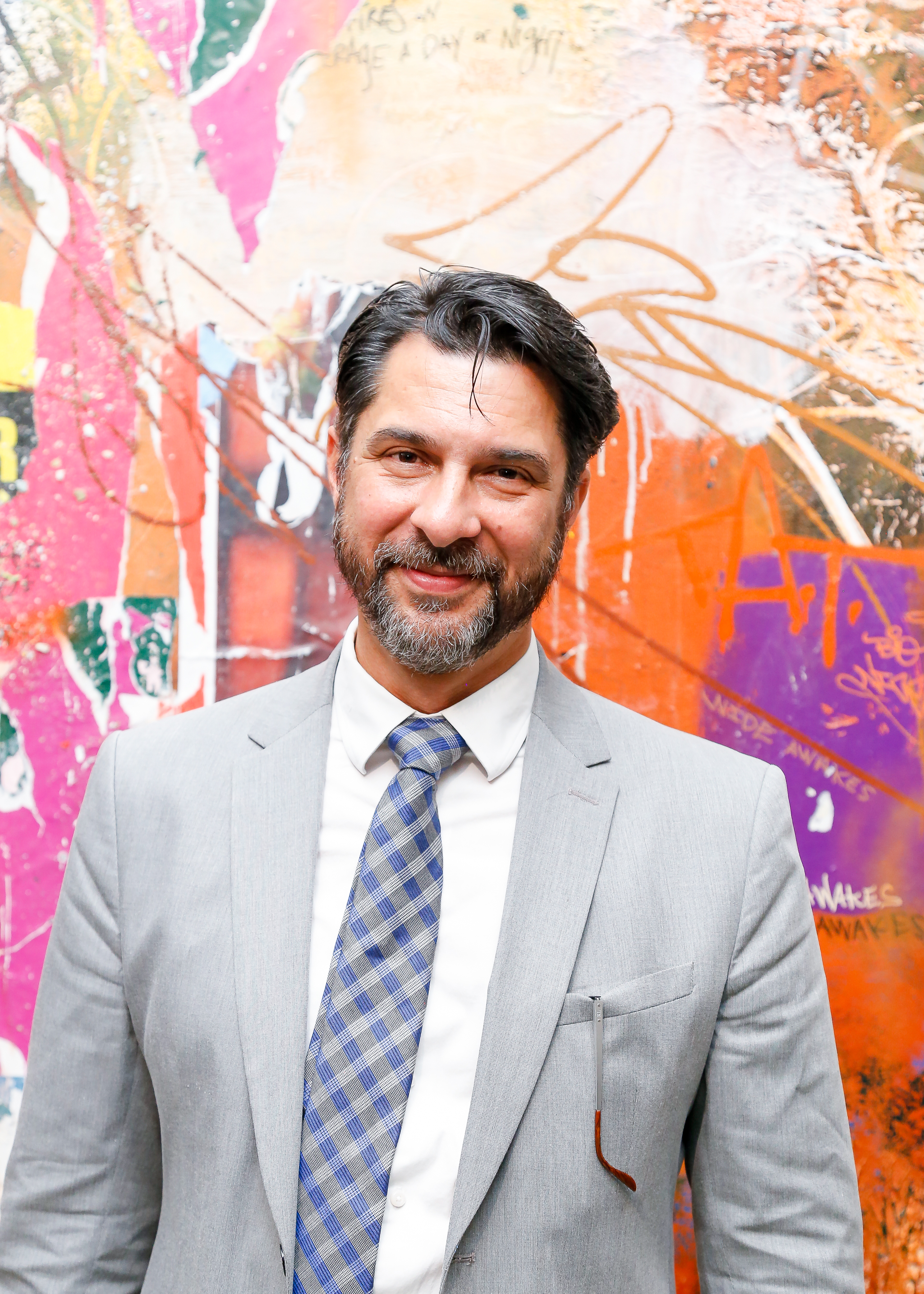


    Klaudio Rodriguez (left, photo by Brendon Cook, BFA) was named Executive Director of the Bronx Museum of the Arts in November after being its interim director since January. We spoke with Mr. Rodriguez to learn more about his role and how he entered the museum field.

    MANY: The first thing we want to do is congratulate you on being named Executive Director at the Bronx Museum of the Arts. Can you tell us a little bit more about the museum?

    Klaudio Rodriguez: The Bronx Museum of the Arts is the contemporary art museum in the borough of the Bronx. We’re about to celebrate our 50th anniversary in 2021. It started in 1971 in the Bronx county courthouse down the street from us and then moved to its current location in 1982. There was an expansion in 2006 with the addition of the Architectonica designed North Building. We’re actually in the middle of a capital campaign project to do a remodel of the south building. We are one of the only free art museums in the city. We’re the only contemporary art museum in the whole borough of the Bronx. I see the museum as a local, national, and international museum. We expand our reach everywhere, but I think one of the things that makes the Bronx Museum the Bronx Museum is that we are firmly planted in the community. We strive to serve all of our diverse communities. The Bronx is one of the most ethnically, economically, and socially diverse of the boroughs here in New York and in the United States with large Latino, African American, and Caribbean communities. We want to reach those audiences while looking at the broader, international art dialogue. 

    When did you officially take on the role of Executive Director?

    I was officially named on November 13. I had been working in an interim capacity since January. 

    What were you doing before you joined the staff at the Bronx Museum?

    I was a Curator at the Frost Art Museum in Miami Florida for ten years.

    From your time as a curator, what experiences have you found most helpful for your role now?

    In my role as a curator, I learned about managing multiple people. As a curator you're working with a variety of artists, you’re orchestrating a whole exhibition, you’re working with your whole staff...registrars, marketing and PR, fundraising...so a lot of that is very transferable into the work that I do every day here. As a curator in a university museum, I also mentored a lot of students. The ability to work with young people, to empower them, and to inspire them translated well into the work I do here, especially with the education department. FIU [Florida International University] is a majority minority community and a lot of the student body had never walked into the museum or had familiarity with the museum. My task was to make it [the museum] accessible to them and understand how it relates to their daily lives. I feel like there are similar challenges here [at the Bronx Museum of the Arts] as well. A lot of the community surrounding the museum doesn’t believe that the museum is for them. So how do we open it and make it accessible for them and make it of value to them? These parallels are very important and helped me as I was thinking about how to engage with our community and how to open doors for them, breaking down perceived and actual physical barriers. 

    Were those some of the reasons that attracted you to leave your position as Curator at FIU to the Bronx Museum of the Arts?

    Absolutely. One of the only reasons I considered leaving Miami for New York was the type of work this institution was doing, how it's firmly rooted in the community and how it’s really engaged in outreach. That was probably the biggest driver for me to come up to New York.

    Can you describe a favorite day on the job?

    The one that stands out is a few weeks ago when the New York Times article came out on November 13. I was overwhelmed by the support and well-wishers from everywhere. I’m still trying to catch up on my emails, texts, and social media because it’s been such an avalanche. It was a pretty spectacular day. As far as day to day, I mean pre-pandemic, my favorite day on the job here is every day that we are open. Every single day that we are open is a good day. I like to walk the galleries. I like to see and engage with people in the galleries. I can’t do this as much now because of social distancing, but seeing people inside the galleries is always a favorite. Pre-pandemic, I loved exhibitions openings too because besides being a big celebration, it validates all the work my staff was doing. So we celebrate the staff, we celebrate the artists, the exhibition. Those days are very fulfilling and I miss those days and having people together. 

    What are some of your initial and long-term goals for the museum?

    One of the initial goals that I wanted to do was mix things up and find better ways to engage the staff across the museum’s departments. I also want to look at the type of work that we’re doing and how it benefits the community. One of the things that this pandemic taught me was that we do have a very nimble staff. The staff were able to shift very quickly and adapt the things that we were doing before the pandemic. I want to continue that momentum. 

    Then there are the basic goals of stabilizing the museum financially because, like all cultural institutions, it has been a challenging year. We’re a small museum and financial stability is a short-term and long-term goal. 

    As far as other long-term goals, we want to continue to put together a dynamic series of exhibitions, filling the calendar for the coming years with dynamic programming. I’ve been working with our curator on strategizing and planning what that vision is going to look like. We have our 50th anniversary coming up, which of course now it is a little upended with the pandemic so we’re thinking about starting the celebration in the summer and going into the following year. Another thing that excites me is the capital project. It’s a $20 million capital campaign to redo the south side of the museum. It will really remake the museum. We’re hoping to create a new entrance to the museum, a more interactive, outward facing engagement with our audience. 

    What most excites you in this opportunity to lead the museum? 

    I’m a curator at heart. The exhibitions excite me. Sitting with our curator [Holly Block Social Justice Curator Jasmine Wahi] to talk and planning out the next three years of exhibitions is exciting. Thinking about where we will be in two or three years and thinking about what’s important and what kind of dialogues and conversations we want to have around the art. 

    So I think I have a tough question for you. Is there any item in the collection that stands out as a personal favorite?

    That’s a tough one and I don’t think I’m going to answer in the way you want me to answer.

    That is okay! It’s a difficult question for a former curator.

    You know in some ways what I like the most is that I am still discovering the collection. I relish learning about new artists, works, styles and regions. When I was a curator at the Frost [Art Museum], even though my background is Latin American Art, I worked as a generalist. I would do exhibitions on second century Roman Art, contemporary art, video art, fashion, and everything in between. I was always re-educating myself by trying to learn something new. Therefore, of the many reasons that I love the collection [at the Bronx Museum of the Arts] is that I am regularly discovering artists and works that I was not familiar with. Mainly because being from Miami I had less exposure to Bronx-based artists. The depth of the collection here is amazing and I am always discovering something new, I find something and I want to learn more about it. 

    Let’s go back a bit further. Where did you grow up and what was it like to grow up there? 

    I grew up in Miami but that doesn’t tell a whole story. My dad is Nicaraguan and my mom is Croatian. They met in Rome and moved to Nicaragua. They lived there for a few years before moving to Miami. I was in Nicaragua for 5 or 6 years. My parents are immigrants, twice over I guess, but I didn’t have the traditional immigrant experience that a lot of my friends had because I sort of had this different background. My dad studied architecture and had a love for the arts and my mom did too. While we didn’t have a lot of money, it was important for my mother to travel to Europe constantly to see family and that meant I went too. She took me to all the best museums in the world growing up. It was important for her to take me to see all these things and it had a huge impact on my life.

    Did any of those experiences influence your decision to enter the museum field?

    I didn’t know that I wanted to go into the museum field, but I knew that I had to be involved with the arts in some capacity. 

    Looking back, would your 18-year-old self imagine that you would be where you are today? 

    My 18-year-old-self wanted to be an architect because my dad wanted to be an architect. He never completed it, so I told myself that I was going to finish what he started. But I also loved art and went to art school and studied painting. 

    What advice would you give yourself?

    I would tell my 18-year-old-self to stay the course. I think that things happen organically in some ways and I ended up exactly where I wanted to be. I don’t know that I could have articulated that when I was 18 necessarily. 

    I studied painting, I studied art history, I studied sociology, I studied architecture, I studied all these different things and I was always learning something more about where my interests lie. I went to art school first because I could draw and that was my first experience learning that just because I could produce something didn’t mean that I was an artist. It takes so much more to be an artist to have this sort of passion for what you do and the commitment to your vision. I learned very quickly that I was more interested in studying it and stepping back away from it and having that dialogue with artists. All those steps were important because it was a period of discovery. It informed me about what I wanted to do and I ended up where I wanted to be. My advice would be to stay the course but explore and experiment and see where it takes you. If I had been too narrowly focused, I don’t think that I would have ended up here.

    Do you have any key mentors or someone who has deeply influenced you? Can you tell us about them? 

    One was a professor at FIU of mine, Juan Martínez [Professor Emeritus of Art History], who passed away recently. He was a mentor that really pushed me into this field. He told me that I could make a living and that I could really do something with this during a time when I was sort of questioning what I was going to do with the rest of my life. I took many classes with him and he just created this love of art and dialogue. 

    The other person who influenced my life was actually someone I never worked with and only had a handful of conversations with and that was Holly Block. She worked with a lot of Cuban artists in the Bronx and she was an expert in the Cuban art field and community. I had been doing a lot of exhibition work with Cuban artists in Miami and she sort of followed what I was doing and she would send me these nice little notes like “Congratulations on this opening,” and I really didn’t know her other than in passing. I came to New York several years ago for a curatorial conference and one of those sessions was held in the Bronx Museum of the Arts and I ran into Holly. We got into a conversation and she was asking me a lot of questions. I didn’t know what she was up to at that point. After I returned to Miami, she called and invited me to come back for a consultation for a Cuban art exhibition at the museum. I flew back up and she asked for my opinion on a lot of things. That’s the best way to get interviewed for a job, when you don’t know that you’re being considered. I was being very critical about a number of things. I think she actually liked that and a few weeks later she asked me to apply for the job. At that point I had no interest in leaving Miami nor my job. I was fairly happy with what I was doing but I applied and flew up for an interview. At the end I hesitated about making the move, but Holly would not take no for an answer. She sold me on the possibilities and here I am. She was the one who told me that I needed to be here. Sadly, I never worked with her. My first day on the job I was told that she was stepping down because she was sick and two weeks later she passed away. But the sole reason I’m here today is because of Holly and you can’t have more of an influence than that.

    Are there any insights you have gained in the past six months about working in a museum that you’d like to share with our museum community? Besides working from home, what has been the biggest change for you? 

    I saw a staff that was creative, innovative, and worked as hard during this period than before. We learned a lot about how we can engage our community without physically being able to do so. My education team stepped up incredibly. Almost overnight our educators produced a full slate of online content. We are very nimble and small enough to move quickly and creatively. For me, I learned a lot and there’s a lot that I will take away from this experience about how to manage, how to keep people motivated, and how to continue the work that we’re doing. If we’re able to do all of this with these obstacles, just think of what we can do without these obstacles. 

    Also, the museum field got together and started working collaboratively on plans to reopen. We [NYC museums] met every Wednesday to create our policies and procedures for reopening. It was nice to see the collaborative, city-wide way of operating that created a bond within the field. But the pandemic has also challenged us to think differently. It’s been an interesting exercise when thinking about the traditional models and how we can adjust and reimagine this model. Hopefully when we come out of this, we take these lessons and implement them in our day to day to continue on. 


    Learn more about the Bronx Museum of the Arts: http://www.bronxmuseum.org/

  • December 21, 2020 1:49 PM | Anonymous

    In a year that has pushed so much of our work and communication into virtual spaces, MANY has added new programs and resources for members on our website and now we are expanding your access to these resources. Beginning in 2021 all Organizational members will have the opportunity to add up to 9 additional contacts in their membership “bundle.” This means more of your staff, volunteers, and board members can benefit from your Organizational Membership with secure, personal access to MANY’s growing number of members-only resources. 


    What does this mean? Instead of having just one email that can login to your membership, and a second email that receives members-only communications, you can have a total of 10 users–each with their own email and password–who can view program recordings, register for events, and post opportunities to the MANY job board. 

    How does it work? Your current account holder will become the “bundle administrator” who can add members to your “bundle” and will have sole access to the account’s billing and renewal information. Once more individuals are added to your membership bundle, they’ll be able to set a password and will have full access to all the benefits of your Organizational Membership. We will share out more information on adding individuals to your membership in January.

    What are some of the resources our staff will have access to? Our Program Recording page includes the spring and summer Virtual Meet-Up sessions when we gathered together as a community on Fridays to connect, learn, and share ways to support one another in the first six months of the pandemic. Our Fall Programs, which include Humanities NY workshops, a series of discussions co-curated by Museum Hue on museums engaging in essential community work, as well as virtual tours and discussions with organizations in the Capital Region are also available at any time. Your bundle members will be able to register for events and automatically receive any MANY Member discounts for paid programs. Your bundle members will also receive all our MANY communications, including our monthly newsletter, Letter from Erika, and other notices about upcoming programs. 

    What else is coming up in 2021? We are excited that we’ll be extending our partnership with NYCON into the next year so active Organizational Members can purchase NYCON Affiliate Memberships at discounted rates. NYCON Memberships are valid from January 1 until December 31, 2021 so they may not be on the same calendar cycle as your MANY renewals. 


    If you have any questions about your membership, member resources, NYCON or getting your colleagues included in your membership bundle, please don’t hesitate to reach out to the MANY Administrator, Hadley DesMeules, hdesmeules@nysmuseums.org

  • December 21, 2020 1:44 PM | Anonymous

    Dear MANY members, friends, and colleagues,

    As we prepare to put behind us a year that changed our lives, I am filled with gratitude for our museum community. Your calls, emails, notes in chat boxes, and social media comments gave us the hope and energy to face an unknowable future together with resolve and resilience. 

    We will need to find ways to sustain ourselves in the face of insufficient federal aid. I believe our strength as a field lies in our ability to remain creative, flexible, and adaptive. When we finally reach the other side of the pandemic, the need to advance equitable staffing practices, generate sufficient funding, and improve digital communications will still exist. In the face of so much loss, it may be hard to reflect upon and change the ways we add to our collections, develop our programs, and serve our communities, but success will come through rebuilding to fit new circumstances. 

    An article by James West Davidson in the July 9 Atlantic Monthly imagined the chapter in a future history textbook about the year 2020. A single chapter will never hold all this year has brought. Future authors and curators will dedicate entire books and exhibitions to this year. 2020 will become a signifier in the same way we understand 1492,1609,1776, and 1861. 2020 will be a symbol, a sound, and an image. It will take the distance of time to distill all of its meanings and learnings. 

    It falls to us to do the work to help future generations hear us loud and clear. Those of us who have lived through this year won’t be able to step back far enough to see the long term effects of 2020. But we can gather the evidence, collect the data, and share the incalculable loss to help future museum colleagues make sense of this year and ensure our museums continue to be integral and essential community partners.

    Look for a survey of NY Museums in the first quarter of 2021 so we can continue to hear you loud and clear. We need your support now so that MANY can be there to serve you as a vital resource, an ally, and an advocate. Every dollar helps. Click here to donate today and let us know how MANY can help you.  


    With gratitude and best wishes for the new year,


    Erika Sanger


  • December 21, 2020 12:23 PM | Anonymous

    In response to the COVID-19 pandemic the William G. Pomeroy Foundation and the Museum Association of New York formed a new partnership and created the Pomeroy Fund for NYS History to support the state’s smallest history-related organizations. In three grant rounds, the Pomeroy Fund for NYS History funded 69 organizations across New York State $147,808.72.

    “MANY was able to quickly assess the urgent needs of the history community and was an invaluable resource during this difficult time,” said Deryn Pomery, Director of Strategic Initiatives of the William G. Pomeroy Foundation. “We were impressed with how they mobilized and advocated for the museum community and assisted us in the grant review process.”

    Grant applications were reviewed by a panel that included MANY Board, MANY staff, and Pomeroy Foundation staff. Eligible organizations did not need to be members of MANY to apply. 


    Total Amount of Funds Dispersed by Grant Round


    Total Number of Grants by REDC 


    Total Amount of Funds by REDC


    Round 1

    In Round 1, 31 organizations with budget sizes of $100,000 or less were awarded grants ranging between $1,000 and $2,000, totalling $50,808.72. More than 170 organizations applied totaling almost $300,000 in requests. Funds were used to purchase computer hardware or software, gain internet access or expand bandwidth, pay for utilities, and secure facilities and collections. 

    The Fulton County Historical Society (FCHS), was awarded $1,558. Since closure at the start of the coronavirus pandemic, FCHS began to think more carefully and creatively about virtual programming, experimenting with online programming, and social media use to improve their digital presence and expand their reach. FCHS used the funds to purchase a laptop computer and to update the museums’ hardware and software in order to develop more online programming. 

    Round 1 Grantees

    Anderson Falls Heritage Society

    Black Rock Historical Society

    Brentwood Historical Society

    Broome County Historical Society

    Clinton County Historical Association

    Darwin R. Barker Library and Museum Association

    Fulton County Historical Society

    Gates Historical Society

    Hastings Historical Society

    Historic Red Hook

    Historical Society of the Tonawandas, Inc.

    Historical Society of Woodstock

    Howland Stone Store Museum

    Interlaken Historical Society

    Java Historical Society

    Lodi Historical Society

    Macedon Historical Society

    Mastic Peninsula Historical Society

    Montgomery County Historical Society

    National Bottle Museum

    Nunda Historical Society

    Oswego County Historical Society

    Peekskill Museum, Inc.

    Preservation Association of the Southern Tier

    Schoharie Colonial Heritage Association

    The Warsaw Historical Society and Gates House Museum

    Town of Madison Historical Society

    Town of New Scotland Historical Association

    West Bloomfield Historical Society

    Wappingers Historical Society Inc.

    Yaphank Historical Society

    Round One of Grants by REDC


    Round One Grant Amount by REDC


    Round Two

    The Pomeroy Fund expanded eligibility in Round Two to organizations with an annual budget size of $150,000 or less but organizations needed to be open to the public no fewer than 250 hours, including program delivery hours. Organizations that received funding in the 1st round were not eligible. Grants were made on a sliding scale between $1,000 and $5,000 based on budget size. The Pomeroy Fund received 112 applications requesting $367,000. 18 organizations were awarded a total of $50,000.

    Applicants shared details regarding their public programming both onsite and virtual, identified the wide range of audiences served, and the ways in which they engage their communities through unique and distinct partnerships. 

    The Livingston County Historical Society used its $4,000 grant to support general operating expenses including salary for the only paid staff person. This staff person was essential in creating a safe reopening plan for the museum. 

    The National Abolition Hall of Fame and Museum (NAHOF), an all volunteer organization, used its $1,000 grant to cover the cost of internet services and its email service to its members and supporters. The grant helped the NAHOF maintain and expand their virtual reach to their local, state, and national supporters and promoted the organization to develop more online programs. 

    Based on a follow up survey administered by MANY that assessed rounds one and two, when asked to specifically name items purchased with grant funding, 35% of awarded organizations mentioned computers and related hardware such as printers. 22% mentioned software like Microsoft Office or Past Perfect. Others mentioned using funds for general operating expenses like utilities and staff salaries. When asked what impact the grant had on staff, organization, and/or community, 34% mentioned increased community engagement and connecting with their community virtually, 20% mentioned increased access to collections through digitization, and 10% mentioned building security. 

    Round Two Grantees

    Beacon Historical Society

    City Island Historical Society

    Constable Hall Association, Inc.

    Dyckman Farmhouse Museum Alliance

    Friends of City Reliquary, Inc.

    Friends of Mills at Staatsburgh

    Greece Historical Society

    Livingston County Historical Society

    National Abolition Hall of Fame and Museum

    North Country Underground Railroad Historical Association

    Phelps Mansion Museum

    Sodus Bay Historical Society

    The Coney Island History Project Inc.

    The Historical Society of the Town of Chester

    The Lake Ronkonkoma Historical Society

    Waterville Historical Society

    Webster Museum and Historical Society

    West Seneca Historical Society and Museum


    Round Two Number of Grants by REDC


    Round Two Grant Amounts by REDC


    Round Three

    In July, a 3rd round of funding was announced to provide an additional $50,000 in grants in a continuation of rapid response to history-related organizations. 21 organizations were selected to raise up to $6,000 for a 2:1 match by the Pomeroy Fund. Each submitted proposals that outlined plans for reopening, identifying multiple funding sources, creative ways to grow donors, and collaborative partnerships to find new avenues of support. 

    These participating organizations had until October 1 to raise funds in order to receive the match. 

    The Irish American Heritage Museum engaged their membership through their newsletter and social media channels. Their Board took an active role in raising the matching funds and was challenged to raise $1,500, half of the needed funds. The museum had 40 donors total and raised $6,355, $355 more than goal. 

    In Western NY, the Steel Plant Museum had 65 individual donors raising $5,013. The grant helped the museum stay open, with  funding dedicated to monthly rent and curator’s salary. 

    In a follow up survey, 30% said they used the funds to support operating expenses and staff salaries and 30% purchased and installed COVID safety measures including sanitation stations, wipes, gloves, masks, safety signage, plexi dividers, touchless amenities for bathrooms, and air filter upgrades.

    Round Three Grantees

    Amagansett Life-Saving and Coast Guard Station Society

    Bundy Museum of History and Art

    Canal Society of New York State, Inc.

    Chenango County Historical Society & Museum

    Cincinnatus Area Heritage Society

    Cobblestone Society

    Douglaston and Little Neck Historical Society

    East Bloomfield Historical Society

    Freeport Historical Society

    Gates Historical Society

    Half-Shire Historical Society

    Historical Society of Newburgh Bay and the Highlands

    Irish American Heritage Museum

    John Brown Lives

    Robert Jenkins House and Museum

    Seneca Museum of Waterways and Industry

    Slate Valley Museum Foundation

    Sodus Bay Historical Society

    The Matilda Joslyn Gage Foundation

    The Steel Plant Museum of Western New York


    Round Three Number of Grants by REDC


    Round Three Grant Amount by REDC


    Throughout each grant round, the high response by the history-related organizations in New York State demonstrates how deeply museums have been affected by the pandemic and how much support will be needed moving forward. MANY thanks the Pomeroy Foundation for their rapid response to aid our historical societies and history museums. 

    “We are very proud of our work with MANY, and through our partnership, were able to provide much needed emergency funding for 69 small history-related organizations struggling during the pandemic,” said Deryn Pomeroy.

  • December 21, 2020 12:16 PM | Anonymous

    Greener Museums in 2021?

    Q and A with Joyce Lee, FAIA, LEED Fellow, WELL AP

    Logo, company name Description automatically generatedIndigoJLD Green + Health; info@indigoJLD.com

    Joyce Lee, FAIA, WELL AP, LEED Fellow is the President of IndigoJLP Green + Health, providing green health, planning, benchmarking, and design services with a focus on cultural facilities. We spoke with Joyce about how museums are working towards being greener spaces, some of the challenges they face, and how museums can become more sustainable with green energy.

    MANY: What is your favorite NY museum and why? 

    Joyce Lee: I have many favorite museums.  Having served as Chief Architect for New York City OMB, I have always been an admirer of the Metropolitan Museum of Art, American Museum of Natural History, the Museum of Modern Art and the Whitney Museum.  But there are plenty of wonderful museums north of the city that I love because of the stories they tell.  The Everson in Syracuse; the Corning Museum of Glass near the Finger Lakes; the Baseball Hall of Fame in Cooperstown and the George Eastman Museum in Rochester.  And as a mid-century modern fan, I took my family to the Empire Plaza in Albany to soak in the sculptures and works of architecture. A socially distanced glorious afternoon was spent in Albany during this apple picking season.

    George Eastman Museum

    Corning Museum of Glass

    What NY museum building projects have most interested you? 

    Having the Queens Botanical Gardens achieve the first LEED Platinum for a New York City government building was definitely a highlight.  The master planning phase already identified water as a common theme and its symbolic importance in this multi-cultural community.  Water is a scare resource. Making it central in the building design of the administration building was so smart and forward-looking. I also encourage everyone to visit the Garden to see the roofscape of this building; it is highly functional in addition to its aesthetics, catching the sun, channeling water and piloting a green roof when there were so few precedents.

    Highlighting water in constructed wetlands and composting toilets makes everyone acutely aware of our symbiotic relationship with clean water. The relevance today is astounding as climate change causes more flooding than ever before.  The deluge of unhealthy water vs. precious clean water resonates all over the world.

    Queens Botanical Gardens

    Has environmental impact always been a concern in your work? 

    Having contributed to the PlaNYC environmental blueprint under Mayor Bloomberg, I find his vision giving a much larger context for my earlier green building work. My team was overseeing a city program when we had to report on over 200 million sqft of public facilities, including museums and libraries. Sustainability and awareness of environmental impact was just simply a better way to manage these assets.  

    My firm’s current cultural institutions work is still very connected to the cities and neighborhoods that they serve.  As trusted institutions and pillars of the community, museums can educate and inspire a future that is not only just, equitable, but beautiful and climate positive for our next generations.  

    The trust factor in museums is also about authenticity. Museums need to talk the talk and walk the walk when it comes to carbon.  Since museums can be enormous carbon emitters, they need to be better steward of the environment too.  It will give museums much credibility when they use the climate platform towards COP 26 and beyond.

    What are some of the sustainable operations and challenges museums face? 

    Although many people believe that car and truck emissions are the biggest contributors to Co2 in the earth’s atmosphere, we now know that buildings in fact contribute at much higher levels (up to more than 70% in cities). Since Co2 is so invisible to many museum professionals, I always start by saying planting a tree for shading can have energy impact.

    We know that lighting is critically important for collections and exhibitions.  The good news is that LED technologies have grown by leaps and bounds in the last decade.  It behooves every museum to find the right LED lights for their space and gallery. Same with HVAC operations in the building where continuous commissioning could save much money, give better control of the collection environment, and increase human comfort. Now there is even low-cost financial programs for energy efficiency and COVID related strategies.  But all this requires retooling our business practice and listening to experts. The biggest challenge?  Complacency.  

    Museums are known as energy intensive organizations, why and what can be done? 

    Yes, since the publication of my benchmarking article in late 2017, many museum professionals have been surprised to learn that a museum can be more carbon intensive than a hospital.  Most museums have 24/7 collections rather than 24/7 patients. And the back-of-the house staff sometimes have so many responsibilities that managing energy efficiency has not been a priority.

    Thanks to the recent ASHRAE Chapter 24 guidance, there are many new advances. They include the range of temperature and relative humidity rather than an absolute number, like 70F or 50%.  The gradual drifting has been well tested now for various material. The relaxation from strict numbers can save a lot of energy and money.  Exhibit design including local micro-climate control display can also make a huge difference in galleries, taking human heat generation into account in high traffic areas. 

    Continuous air monitoring and AI driven analytics can pinpoint energy saving opportunities while improving air quality and ventilation. Finally, the design of large volume spaces, behind-the-scene spaces as well as the tightness of the building envelope can be defining factors if one is comprehensive about retrofits.

    How can a museum that was built 100 years ago become a green building and become more sustainable? 

    Believe it or not, many older buildings constructed before the age of air-conditioning and elevators tend to be greener, more humane buildings than those in later eras.  With a robust building mass and large windows, there is a lot to work with already.  Remember this summer those buildings with operable windows and cross ventilation are those making headways too with fighting COVID?  

    Then there is the time value of carbon.  The older the building, the lower the embodied carbon, which is a good thing.  Every demolition creates enormous construction waste, some of which could be toxic, like asbestos, and much is still landfill bound. Retaining the building and creatively adapting it with today’s functions have many promises for museums.  In our recent UN Climate Week webinar, we highlighted MoMA’s embodied carbon video in our webinar booklet.  It is an important reference.

    Who in the organization should be responsible for/own the work? Operations? Facilities? 

    Ideally everyone should have sustainability in the job description. Having the CEO embrace the concept is certainly a leadership move.  Having sustainability and climate action discussed in board meetings is enormously helpful.  Do not forget that the incoming generation of donors are very versed in this topic and may be driving Tesla cars already. The staff at the museum needs to be equally knowledgeable and savvy in their own domain, whether it is collections, education, facilities or communications.   

    Start with asking how one can use climate action as a way to lower operational cost.  Is every long and short haul flight necessary?  Do lights have to be on in all the current areas? Do we have guidance for event planners to save energy and water? Can we revisit setpoints in the building?  Are there savings in trash removal? In this financial environment, who would want to be wasteful?  This “waste-not” mindset could be applied in many ways.  Please check out past winners of the American Alliance of Museums (AAM) Sustainability Excellence Awards.  

    How has the Covid-19 pandemic changed your work?

    I am so saddened by the fatalities in this country.  If there is a silver lining, it is the rapid recognition of quality indoor environments.  Museums offer this exemplar environment to the public. This summer I collaborated with a number of built environment experts to encourage the World Health Organization to be clearer about indoor aerosol transmission.  It is a subject that I have been studying with other scientists since early this year before the lockdown. We started looking at air changes, filters, efficacies of ultra-violet lights and bipolar ionization for clients. 

    While conservators have been taking the lead to measure air around the collections, we now know that continuously monitoring air quality is beneficial for human beings and collections in a museum. As for touchless faucets and toilets, adding in sensors and upgrading to low flow toilets can be synergistic strategies for health (lowering virus transmission) and the environment.  

    Then there is the design of the outdoors.  Many museums could create well-conceived outdoor functional spaces while enhancing its urban design and contribution to the community. Even a rain garden is an amenity. Most regions of New York can have meaningful three-season active or contemplative spaces so that the visitors have more choices to engage with the institution.

    What can a museum expect to save when they invest in green technologies?  

    We talk about the benefits of greening already, healthier for people and smarter for collections.  It is not unusual to save 20-50% utility costs through an intensive analysis of the current operations. 

    Adding on to efficiency savings is the incorporation of state and local financial incentives. The New York State Energy Research and Development Authority (NYSERDA) has programs to help New York institutions.  Take solar for example, a photovoltaic array could take Kwh off more carbon intensive grid electricity.  Both the Sciencenter in Ithaca and the New York Hall of Science have been early adopters of renewable energy.  

    Once the solar array is paid off, the institution could harness the clean electricity for free. It is very possible to generate green power cheaper than the museum buying it from the grid while getting very close to achieving carbon neutrality.

    What are the short-term as well as long-term returns?

    The short-term return is sending an immediate message to your visiting public and potential donors that the museum action is part of the solution, not part of the problem. The International Council of Museums (ICOM) has made a sustainability resolution in 2019 with the global museum community.  

    By following the Paris Agreement principles, there are implementation avenues like operating expense reduction and capital expenditure avoidance through a shared savings model, commonly called an Energy Services Agreement.

    Long term savings could be quite attractive.  As a rule of thumb, for every $100,000/year in energy savings (around 1/3 of annual bills), the museum could identify $500,000 upfront capital improvement it does not need to fund. 20% of the $100K/yr savings could go towards reducing annual museum budgets and 80% would go to the Service Agreement to equipment payments and comprehensive maintenance. Every capital plan or campaign should benchmark its annual energy and water bills and go through this exercise to maximize its year-over-year savings and long-term returns.

    For museums who have made progress in reaching green building status, what is the next step?

    This is by no means exhaustive; many in the embedded list already have LEED status by 2019 for design and construction.  The goal now is to operate green, paying attention to all aspects of the institutional operations, from exhibits to catering, staff commute and air travel as well as managing waste and recycling.  In addition to Energy Star Portfolio Manager, the international ARC platform is very comprehensive and aligns with private companies that report on ESG (Environmental, Social and Governance).  I am encouraged to find many interested museums in the commonwealth countries as well.

    Museums can now demonstrate action not only in programming and operations, one can also lead by example through the museums’ investment portfolios. I am thrilled to be partnering with the CEO of the Wild Center in Tupper Lake, NY, to offer an American Alliance of Museums (AAM) free webinar on Endowments and ESG on February 17. We hope it will be very enlightening.


    Joyce Lee FAIA, WELL AP, LEED Fellow, is president of IndigoJLD Green + Health providing green health, planning, benchmarking, and design services with a focus on cultural facilities. Joyce served under Mayor Bloomberg as Chief Architect at the New York City OMB. Her work has received numerous awards from USGBC, AIA, and HHS. She is on the University of Pennsylvania adjunct faculty. Her practice continues to assist cities to strengthen community sustainability, and help organizations reach carbon and wellness goals.  She can be reached at info@IndigoJLD.com


The Museum Association of New York is a 501 (c) 3 nonprofit organization. 

Powered by Wild Apricot Membership Software